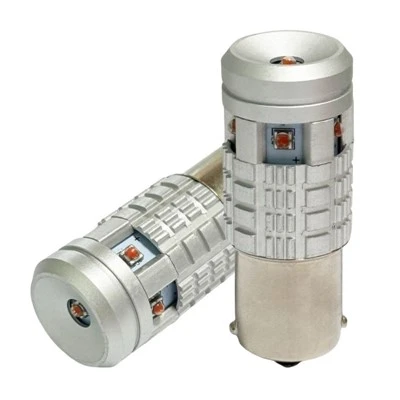
If you’ve ever knelt to replace a tiny bulb in a Christmas string, a vintage car dashboard, or a vintage arcade game, you’ve probably stared at two common options: LED miniature bulbs and incandescent miniature bulbs. For years, incandescents were the go-to choice for these small, low-power applications—but as an LED miniature bulb supplier, I’ve watched firsthand how LED technology has shifted expectations, and how much confusion still exists between these two types of tiny lights. Let’s break down the key differences, using real-world examples from the projects I’ve supported over the last decade, so you can make a choice that fits your needs, whether you’re a hobbyist, a repair technician, or a small business owner. LED Miniature Bulb
First, let’s start with the most basic science: how each bulb produces light. Incandescent miniature bulbs work on a super simple principle that’s been around since the 1800s. Inside a tiny glass bulb, there’s a thin metal filament (usually tungsten) that’s heated to extreme temperatures—around 2,500 degrees Celsius—by an electric current. When the filament gets that hot, it glows, and that glow is the light we see. The catch here is that only about 5% of the energy that goes into heating the filament actually turns into visible light. The other 95% is released as heat—so hot, in fact, that if you touch a lit incandescent miniature bulb, you’ll burn your finger. That’s why old Christmas string lights always made the plastic strands feel warm after a few hours of use.
LED miniature bulbs, on the other hand, use a process called electroluminescence. LEDs are semiconductors—tiny pieces of material (usually gallium arsenide or gallium phosphide) that, when an electric current passes through them, excites the electrons in the semiconductor. When those electrons drop back to their normal energy state, they release photons—particles of light. This is a cold process, mostly. The semiconductor only warms up a tiny amount, so almost all the energy that goes into an LED turns into visible light. For context, a standard 12-volt incandescent miniature bulb (common in car dashboards or small appliances) produces around 10 lumens per watt. An equivalent LED miniature bulb produces around 50 lumens per watt—five times as much light for the same amount of electricity. That efficiency gap is the biggest differentiator, and it’s why so many of my customers reach out when they’re looking to cut energy costs.
Next, there’s lifespan—and this is where incandescents really fall short, no matter how much I hate to say it (I still have a soft spot for the nostalgic glow of old incandescents). A typical incandescent miniature bulb lasts anywhere from 1,000 to 2,000 hours, depending on how often it’s turned on and off. The filament wears out over time, eventually snapping from constant heating and cooling cycles. Think about a car dashboard bulb that’s on every time you start the car, day in and day out. That 1,000-hour lifespan means you’ll need to replace it at least once every few years, if not more often.
LED miniature bulbs, by contrast, have an average lifespan of 25,000 to 50,000 hours. That’s 25 to 50 times longer than an incandescent. Let’s do the math: if you use a tiny bulb for 10 hours a day, every day, an LED will last you 10 years. An incandescent will last less than a year. I had a customer last year who owned a vintage pinball machine with 40 miniature bulbs throughout the playfield. He was replacing incandescents every 6 months, at a cost of over $200 a year. After switching to our LED miniature bulbs, he’s gone 3 years without a single replacement, and he told me he’s saved enough to cover the cost of the bulbs multiple times over. For applications where changing bulbs is hard—like inside a wall-mounted control panel or a high-reach sign—this longevity is a game-changer.
Then there’s durability, which is another area where LEDs outperform incandescents, especially for small, portable, or high-vibration applications. Incandescent miniature bulbs have that fragile glass envelope holding the filament, which is super thin and easy to break. If you drop a string of incandescent Christmas lights, chances are one or two bulbs will crack, and the whole string might stop working. The filament is also delicate, so even a small jolt can snap it. I remember a customer who bought a set of vintage trailer clearance lights with incandescents. He drove 6 hours to a camping trip, and half the bulbs were broken by the time he got there—shaking on bumpy back roads is enough to destroy incandescents.
LED miniature bulbs don’t have a glass filament or a thin glass envelope (many have a hard plastic shell instead). The semiconductor chip is tiny and mounted on a circuit board, so it can handle bumps, vibrations, and drops much better. They’re also resistant to temperature fluctuations, which is great for outdoor applications or cold environments like freezers. I’ve had customers use our LED miniature bulbs in everything from racing car dashboards (vibration is non-negotiable there) to greenhouse grow lights, where temperature swings are extreme. Incandescents would blow within a month in those conditions; our LEDs have lasted years.
Light quality is a bit trickier, because it comes down to preference. Incandescent miniature bulbs produce a warm, yellowish glow—think the soft light of a traditional table lamp or old Christmas lights. That nostalgic, warm tone is why many people still reach for them for decorative uses. But incandescents have a narrow color temperature range, almost always around 2700K to 3000K. LEDs, though, can be made to produce almost any color temperature, from warm yellow to cool blue or even pure white. If you want a bright, crisp white light for a workbench or a car dashboard, an LED miniature bulb is the way to go. If you want that cozy, old-school glow for a vintage string light, there are even warm-white LEDs that mimic incandescents almost exactly now. That said, not all LEDs are created equal—cheap LEDs can have a harsh, blue tint, but when you source them from a reputable supplier like ours, you get consistent, high-quality color that meets your needs.
Energy use is another big one, especially as energy costs continue to rise. A typical 12-volt incandescent miniature bulb uses about 5 watts of power. An equivalent LED miniature bulb uses only about 1 watt. That might not sound like much on its own, but if you have a string of 50 tiny bulbs, that’s 250 watts for incandescents vs. 50 watts for LEDs. Multiply that by the number of hours you use them, and your energy bill adds up fast. For commercial customers, like a restaurant that uses miniature bulbs in outdoor signage all night, that savings is even more significant. I had a small business customer who owned a 20-foot neon sign that used incandescent miniature bulbs for the accent lights. He was paying $150 a month in electricity just for those small bulbs. After switching to our LEDs, that dropped to $30 a month—an 80% savings, and he didn’t notice any difference in the brightness of the sign.
There are a few downsides to LEDs, though, that I always tell customers about, so you don’t get caught off guard. First, upfront cost. A single incandescent miniature bulb costs pennies—usually less than $0.50. A comparable LED miniature bulb costs a few dollars, depending on the type. That sticker shock is why some hobbyists hesitate. But when you factor in the lifespan and energy savings, the LED is actually cheaper in the long run. For example, if you need 100 bulbs, incandescents cost $5 total, but you’ll replace them every year, spending $50 a year on replacements and energy. LEDs cost $30 total, and you’ll only replace them once every 10 years—so over 10 years, LEDs save you $470.
Another downside is that some older fixtures aren’t designed for LEDs, because they’re wired for the slightly different current requirements of incandescents. Most modern fixtures work fine, but if you’re putting LEDs into a vintage car or an old arcade game, you might need a small resistor to make sure the bulb works properly. That’s a minor adjustment, though, and something we always include with our LED miniature bulbs for older applications, so you don’t have to figure it out yourself.
Now, let’s talk about where each bulb is best suited. Incandescent miniature bulbs still have a place—mostly for small, low-demand applications where cost is the only priority, and replacing bulbs is easy. If you need a single bulb that’s only going to be on for a few hours a year, like a decorative bulb in a rarely used clock, an incandescent might be fine. But for most other applications, LEDs are the better choice. If you’re using bulbs in a car, a boat, a sign, a pinball machine, or any application where you want long life, low energy use, and durability, LED miniature bulbs are the clear winner.
As someone who’s been in the LED miniature bulb supply business for over a decade, I’ve seen all the myths: that LEDs are too expensive, that they don’t produce enough light, that they don’t work in cold weather. But those myths are outdated. The technology has come so far, and the savings are real. I’ve helped hundreds of customers make the switch, and almost all of them tell me they wish they’d done it sooner.
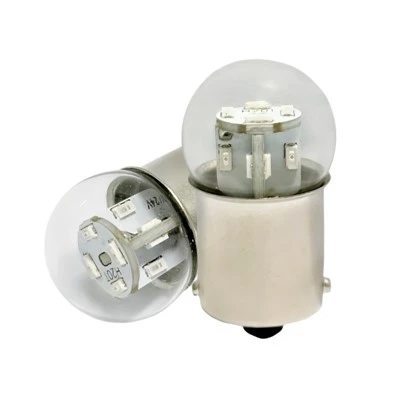
If you’re tired of replacing tiny bulbs every few months, if you’re looking to lower your energy costs, or if you need bulbs that can handle tough conditions like vibration or temperature swings, it’s time to make the switch to LED miniature bulbs. We offer a wide range of LED miniature bulbs in every size, voltage, and color, from warm white to bright red, blue, and green, perfect for Christmas lights, car dashboards, vintage games, and industrial applications.
Whether you’re a hobbyist working on a personal project, a repair technician, or a business owner, we’re here to help you find the right bulbs for your needs. If you’re ready to compare LED and incandescent miniature bulbs for your specific application, reach out to our team to discuss your project details and get a customized quote. We’re always happy to answer questions, walk you through the differences in person, and help you make the best choice for your budget and goals.
G4 Bulb References
- U.S. Department of Energy. (2022). Lighting Technology Fact Sheet: LEDs vs. Incandescents.
- Illuminating Engineering Society (IES). (2021). Technical Report on Miniature Lamp Performance.
- Consumer Reports. (2023). Guide to Household Lighting: Miniature Bulb Options.
- Automotive Industrial Lighting Association (AILA). (2022). Miniature Lamp Durability and Energy Efficiency Study.
BULBPLAN Co., Ltd.
As one of the most professional led miniature bulb manufacturers and suppliers in China, our products have good reputation in the market. Please feel free to wholesale cheap led miniature bulb for sale here and get pricelist from our factory. Quality products and reasonable price are available.
Address: No. 86 Zhongli Road, Nancheng Street, Dongguan City, Guangdong Province
E-mail: Alex@bulbplan.com
WebSite: https://www.nicebulbs.com/
