Hey there, gear motor squad! If you’re here scrolling ‘cause you’ve got R Series helical gear motors on your mind—whether you’re already running ’em hard or just weighing if they’re the right pick for your operation—stick around. I’m not some corporate robot spewing jargon; I’m the person who’s fielded 1000+ questions from folks like you about keeping these bad boys purring for years, not just months. Let’s cut the crap and get real about what these motors actually need to stay reliable, straight from someone who sells ’em, fixes ’em, and watches ’em run day in and day out. R Series Helical Gear Motors

First off, let’s get one thing straight: R Series helical gear motors aren’t the “set it and forget it” type—no, not even the heavy-duty industrial ones we ship out for conveyors, mixers, and all that grunt work. But here’s the good news: their maintenance is way simpler and way less frequent than you’d think, especially if you stay on top of the basics. I’ve seen customers skip a step or two and end up with a motor that’s dead in 18 months, versus the 10+ year lifespan we promise when it’s cared for. Don’t be that guy.
Let’s start with the big one everyone hates to talk about: oil changes. For real, though, this is make or break for helical gear motors. Why? The helical gears mesh at a slight angle, right? That means they generate more torque than spur gears, but they also push tiny metal shavings and heat into that oil as they run. Skip oil changes, and those shavings turn into sandpaper, chewing up the gears faster than you can say “downtime.” Now, what’s the actual schedule? I don’t just go by the manual (though I’ll link that in our product docs if you need it)—here’s the real-world rule I tell every customer: first oil change at 500 operating hours, then every 3000 hours after that. Wait, hold up—don’t forget the fine print: if your motor’s running in a dusty factory, super hot warehouse, or anywhere with a ton of moisture, cut that schedule in half. We had a customer in a steel mill last year who tried the 3000-hour schedule, and his motor’s oil was thick as mud with metal bits in 1200 hours. Oops. Also, when you change the oil, don’t just dump any random fluid in it. I see folks do this all the time—they grab whatever’s on the shelf, not knowing R Series motors need extreme pressure (EP) gear oil, usually ISO VG 220 or 320. Check your motor’s nameplate—we stamp the recommended oil right on there, don’t ignore it. Using the wrong oil is like feeding your car cheap gas; it works for a little while, but you’ll pay for it later. And while you’re at it, don’t forget the oil seal and drain plug gaskets. Those $0.50 gaskets are the difference between oil leaking all over your floor (or your product) and a clean, hassle-free change. I keep extra gaskets in my toolbox for my personal truck, and I make every customer do the same for their gear motors.
Next up, the stuff you should do every month—super quick, takes 15 minutes tops, and will save you from so many headaches. First, visual inspections. Walk up to the motor, no fancy tools needed. Check for oil leaks around the shaft seals, the gearbox housing, and the connection points. Even a tiny drip might not seem like a big deal, but over a month that’s enough to low-level the oil, and boom—no lubrication, gears wear out. Also, look at the mounting. Is the motor still tight to the equipment? Vibration from the motor loosens bolts over time, especially if you’re running heavy loads. Wobbly mounts mean misaligned gears, which lead to way more stress and wear. Another thing to check: the vent cap. Every R Series motor has one, it’s that little plastic (or metal) cap on top of the gearbox. It lets pressure build up and release so the seal doesn’t get pushed out. If that vent is clogged with dust or gunk, pressure builds inside, and eventually oil leaks out. I’ve fixed a dozen motors where a clogged vent was the only problem—so easy to clean with a toothpick or compressed air, people just miss it. Also, while you’re checking the outside, listen. Turn the motor on for 10 seconds (don’t run it hot) and listen for weird noises. A low growl? A high-pitched whine? That’s not normal. Normal R Series motors run quiet, like a fridge hum. If it’s making noise, it’s usually low oil or worn gears. Don’t wait until it dies to look at it.
Wait, what about the motor itself—like the electrical side, not just the gearbox? A lot of people forget the motor and focus only on the gear part. That’s a mistake. The electrical components need love too. Every three months, check the power connections. Tighten the terminals—vibration works them loose, and loose connections cause heat, which kills wiring and windings faster. Also, if your motor has a fan (most R Series do, for cooling), make sure the fan blades aren’t caked with dust. A dirty fan can’t cool the motor properly, especially if it’s running 24/7 in a hot space. We had a customer in a bakery last year—flour dust everywhere—his motor’s fan was so clogged it overheated in 6 months. He cleaned it, and it’s still running 2 years later. Pro tip: if you run the motor in a super dirty environment, cover the fan with a simple mesh screen to keep gunk off—way easier than cleaning the fan every week.
Now, what about long-term stuff? Like if you plan to store an R Series motor for a few months, or if you’re operating it at max load all the time. Storage is a big one. If you pull a motor from service and stick it in a corner, don’t just leave it as-is. Drain the old oil, add some light preservative oil to the gearbox, plug the shaft ends with grease to keep moisture out, and cover the whole thing to keep dust and water off. Moisture is the enemy of metal gears—if they sit and rust, even stored, you’ll have a nightmare when you go to use it again. And if you’re running your motor at 100% load all the time, not just occasional heavy work, you’ll want to bump up your maintenance schedule a little. I’d do oil changes every 2000 hours instead of 3000, and add a gear alignment check twice a year. Wait, alignment—oh right, I almost forgot that one. Gear misalignment is the #1 cause of early gear motor failure, hands down. When the motor is mounted, the gear shaft and the driven equipment’s shaft need to be perfectly straight. If they’re even a tiny bit off, the gears don’t mesh right, they rub, they generate more heat, they wear out. For most customers, a quick alignment check once a year is enough, but if you’re running heavy loads or the equipment gets moved (like on a conveyor that’s adjusted regularly), do it every 6 months. You can use a simple dial indicator for this—nothing fancy, and most local maintenance guys have one. If you’re not sure how to do it, reach out, we can walk you through it in 10 minutes over the phone.
Wait, let’s talk about the stuff you shouldn’t do, too. I’ve seen customers ruin perfectly good motors by skipping these: first, don’t overload the motor beyond its rated torque. That’s what the nameplate is for—every R Series motor has a max torque number. If you’re trying to push a conveyor that’s jammed, or a mixer that’s got too much product in it, you’re straining those helical gears way more than they were designed for. Even for a second, that tiny overload can cause micro-wear that adds up over time. Second, don’t use cheap replacements parts. I know the little gearbox seal or a bearing might cost $10 online, but those cheap parts don’t hold up to the pressures in R Series motors. When you need a replacement, buy the OEM parts from a supplier you trust (hi, that’s us). We test every seal and bearing to make sure they match what’s in our motors—no cutting corners there. Third, don’t ignore small issues. That tiny oil leak? That weird noise? If it’s not bothering you today, it will be next month, and by then you’ll be looking at a $1000 motor rebuild instead of a $20 gasket replacement.
Let me throw in a real example to make this concrete. Last quarter, I worked with a customer who had three R Series motors on a packaging line. He’d been running them for 4 years, never did an oil change, never checked the vent. Two of them started making noise, and the third started leaking oil. He called me panicking, said he thought he’d have to replace all three. I sent a tech out, and we drained the oil—there was metal shavings in there so thick it looked like coffee grounds. We did an oil change, cleaned the vents, tightened the mounts, checked the alignment. Those two noisy motors stopped making noise, the leak fixed, and they’ve been running strong ever since. The only cost was the oil, gaskets, and a 2-hour service call—way cheaper than buying three new motors. That’s the kind of stuff maintenance does: it turns a potential catastrophe into a quick fix.
So, wrapping this up, let’s make this super simple. The maintenance for R Series helical gear motors isn’t complicated, but it’s non-negotiable if you want them to last. Here’s the cheat sheet:
- Oil changes: 500hrs first, then every 3000hrs (cut in half for dirty/hot/moist environments)
- Monthly: Visual check for leaks, loose mounts, clean vents, listen for weird noises
- Quarterly: Tighten electrical connections, clean fan blades
- Annually: Check gear alignment (twice a year for heavy loads/moved equipment)
- Never: Overload, use cheap parts, skip small issues
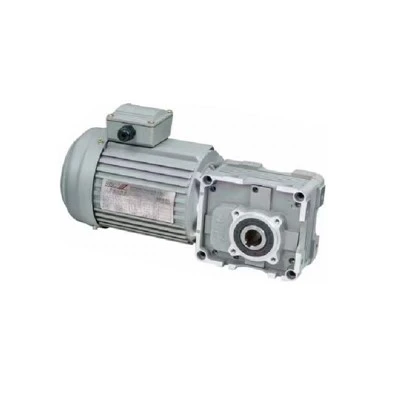
If you’re in the market for R Series helical gear motors, or you’ve got an existing one that’s acting up, or you just want more details on the maintenance schedule that fits your specific setup, hit us up. We’re not just a supplier—we’re the folks who know these motors inside and out, and we’ll help you keep ’em running as long as possible. No pushy sales talk, no weird fine print, just straight answers.
Inline Helical Gear Boxes References
- Siemens AG. (2020). Helical Gear Motor Maintenance Guidelines. Industrial Automation and Drives Division.
- Baldor Electric Company. (2019). R Series Gear Motor Operational Best Practices. Reliability and Maintenance Institute.
- American Gear Manufacturers Association (AGMA). (2021). Standard for Maintenance of Industrial Gear Units (AGMA 9000-C15).
GuangDong Ruisico Transmission Technology Co., Ltd.
Guangdong Ruisico Transmission Technology Co., Ltd. is one of the most reliable r series helical gear motors manufacturers and suppliers in China, also supports customized service. Welcome to buy durable r series helical gear motors made in China here and get quotation from our factory. For price consultation, contact us.
Address: No. 70, Anjing Road, Shengfeng Community, Xiaolan Town, Zhongshan City
E-mail: info@risc-drive.com
WebSite: https://www.risc-motor.com/
